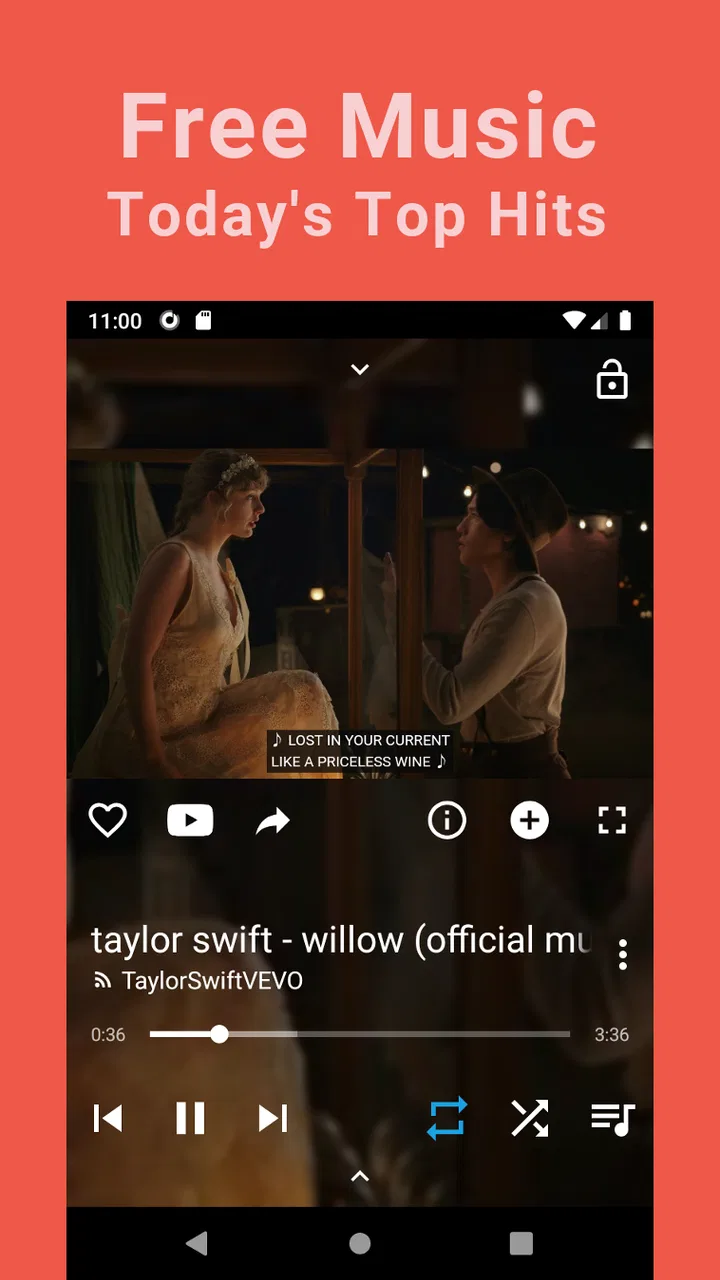
Unlimited MP3 Music Downloader
- 4.7
- Rating
- 10.00M
- Installs
- Free
- Price

 Analysis by App-foxy
I came to Unlimited MP3 Music Downloader looking for a simpler way to keep music available when my connection was unreliable. The app sits in the Music & Audio category and is developed by Whim Music. Its basic appeal is easy to understand: it combines music playback with MP3 downloading and access to music stored in a cloud drive, rather than forcing me to move between several separate tools.
That sounds convenient, but the real question is how well the complete journey works. In everyday use, there are several handoffs: finding something to listen to, deciding whether it should stay available offline, moving it into a usable library, and returning to it later without repeating the search. My experience is that the app is most useful when I treat it as a personal music workspace, not as a replacement for every streaming service or a guarantee that every song will be available in exactly the form I expect.
From a music need to a usable offline library
I find the biggest benefit of a personal offline library is not simply having more music; it is knowing which tracks will be ready when I need them. I would build that confidence gradually, checking a small selection before relying on it for a longer trip. That practical starting point also makes it easier to judge how the app behaves when listening becomes heavier.
You May Also Like

 Blood Strike: 2.5 Anniversary
Blood Strike’s Loadouts Turn Every Drop Into a Tactical Gamble
A close look at Blood Strike’s custom loadouts: how fast access to signature weapons reshapes its battle royale rhythm, rewards preparation, and narrows the gap between fights.

 Pandora - Music & Podcasts
Pandora’s Music Is Easy to Start, but Harder to Recover
Pandora’s strength is its low-effort path from a seed to a station. Its weak spot is how much confidence it asks you to place in connection, setup, and quiet recovery.

 8 Ball Pool
 Is Built on Rivalries, Rematches, and Routine
A close look at the rivalries, rematches, shared routines, and unanswered safety questions that turn a quick pool match into a persistent mobile community.

 Samsung Music
’s Quiet Strength Is Playing What You Already Own
Its reach comes less from spectacle than from dependable access to a personal library. That simplicity is both the app’s strongest retention engine and its ceiling.

 AccuWeather: Weather Radar
AccuWeather Review: A Quick, Clear Forecast for Everyday Decisions
For everyday plans, the best forecast is the one you can understand quickly. AccuWeather makes rain timing, radar, and local conditions easy to act on, with a few trade-offs.

 Hill Climb Racing
Why Hill Climb Racing Still Turns Crashes Into One More Run
A tiny car, a bumpy hill and one more upgrade: Hill Climb Racing keeps resurfacing because its simple chaos makes every near-miss feel personal.
More From Our News Desk



Starting with the right expectation
The app is free to install, which makes it easy to try without committing money at the beginning. It is intended for a Teen audience, and optional in-app purchases range from $0.99 to $7.99 per item. I would not install it expecting a traditional, carefully curated subscription service with identical catalogs, editorial playlists, and seamless licensing across every device. Its more interesting role is as a practical downloader and player for people who already manage MP3 files or use cloud storage as part of their music routine.
That distinction matters before the first search. If I want polished recommendations, synchronized listening history, and a tightly controlled catalog, a mainstream streaming app may be a better fit. If I want to gather music from permitted sources, keep files available for a trip, or play tracks already stored in my cloud drive, this app has a more direct purpose.
The app has been available since November 27, 2019, and its current version is 628, with Android support starting at version 5.0. Those details make it approachable for people using older Android hardware, although compatibility alone does not guarantee the same smoothness on every phone. On a modest device, I would keep the library organized from the beginning rather than importing a large, messy collection and trying to sort it out later.
Step one: deciding what belongs in the library
My first useful habit is to separate three kinds of music: tracks I want to hear immediately, files I want to keep offline, and material I already own in cloud storage. That small distinction prevents the app from becoming a dumping ground. A song that I only want to sample does not need to occupy the same place in my working library as an album I plan to play during a flight or a long commute.
The download-oriented design is especially useful when the starting point is a cloud drive. Instead of treating cloud storage as a final destination, I can use it as the handoff point between my existing files and the player. This is a practical workflow for someone who has collected MP3s over time, received legitimate audio files from a friend, or keeps personal recordings in a remote folder. The important limitation is that the app does not change ownership rights. I still need permission to download and play anything I use.
I also found that file naming becomes more important than I expected. A folder full of vaguely named tracks may play correctly but remain frustrating to browse. Before bringing music into the app, I would clean up artist and album names where possible, group related tracks together, and avoid duplicate copies. That preparation is not glamorous, but it makes the later search and offline handoff much less confusing.
Step two: moving from source to playback
The central flow is straightforward in concept: locate music, download or access it, then play it from the app. The useful part is that these activities are connected instead of being scattered across a file manager, a cloud application, and a separate audio player. I can begin with a song I want now, then decide whether it deserves a more permanent place in my offline rotation.
For a realistic example, imagine preparing for a train journey through areas with weak reception. I would first identify the albums or individual MP3 files I am allowed to use, bring them into the app from the available source, and check that they appear in the music library. Before leaving home, I would start playback once and confirm that the tracks are actually accessible as local offline music. That final check is easy to skip, but it is the difference between a prepared trip and a frustrating search for a connection on the platform.
The handoff from cloud storage to local listening is where the app offers its clearest advantage over a plain streaming player. Cloud files can remain useful after the network disappears, provided the download process has completed. I would not assume that merely seeing a file in a remote folder means it is ready for offline use. I prefer to test a track with connectivity temporarily unavailable, because a visible library entry and a genuinely local copy are not always the same thing in a music workflow.
Another practical tip is to download in small groups rather than selecting an entire unorganized collection at once. Smaller batches make it easier to notice a failed transfer, a duplicate, or a file that does not behave as expected. They also give me a sensible way to build separate listening groups, such as a morning playlist, a travel folder, or a collection for background work.
Step three: turning files into a routine
Once the music is inside the player, the app becomes less about downloading and more about reducing repeated effort. I want to open it and reach the tracks I actually use, not repeat the same search every time. This is where basic library discipline pays off: consistent names, sensible folders, and a clear distinction between temporary downloads and music I intend to keep.
I would also avoid treating every download as permanent. Offline storage is valuable, but a phone can quickly become crowded when several versions of the same track or forgotten albums accumulate. Every so often, I would review what I have not played and remove files that no longer serve a purpose. That is a better workflow than waiting until storage becomes a problem and then deleting music without knowing which copy is important.
The player is particularly appealing to people who dislike being locked into one listening method. A cloud drive can act as the source, the downloader can handle the transition, and the built-in playback experience can handle the final step. The trade-off is that this flexibility asks more from me than a fully managed subscription service. I am responsible for knowing where my files came from, how they are organized, and which version I want to keep.
The handoffs that matter most
There are three handoffs in the experience, and each has a different risk. The first is from discovery to selection: I need to identify the correct track rather than downloading a confusing duplicate or an unwanted file. The second is from remote storage to offline storage: I need to confirm that the download completed and that the music can be played without a connection. The third is from the app to my daily routine: I need to remember where the music lives and keep the library tidy enough to use quickly.
The first handoff is mostly a matter of attention. The second deserves a deliberate check. The third determines whether the app remains useful after the initial enthusiasm fades. In my view, this is the difference between installing a downloader and building a dependable offline music habit. The app can shorten the path, but it cannot organize an untidy collection automatically through good intentions alone.
There is also a handoff between this app and the alternatives people commonly use. A streaming service usually starts with a catalog and ends with playback, while this app starts more naturally with files, cloud storage, or a need for MP3 access. A file manager can move audio around but is rarely pleasant for regular listening. A dedicated offline player may offer a cleaner library experience, but it may not provide the same combined route from cloud drive to music playback. Unlimited MP3 Music Downloader is strongest in the middle of those choices.
What the finished result feels like
When the workflow is prepared properly, the result is convenient: I can keep selected music available without depending on a live connection every time I press play. That is useful for commuting, travel, limited-data plans, older phones, or places where reception comes and goes. It also suits listeners who already possess a personal MP3 collection and want one app to bridge storage and listening.
The app’s public reception suggests that this use case resonates with a large audience. It holds a 4.7 average from around 279 thousand ratings, has roughly 10 million or more installs, and includes about 10 thousand written reviews. I see those figures as evidence of broad interest rather than a promise that every individual workflow will be perfect. Music libraries vary too much for a single app to behave identically for everyone.
My favorite outcome is not simply having more songs. It is having fewer interruptions between deciding what I want and actually hearing it. If I prepare a small offline selection before leaving home, I do not need to reopen a cloud drive, wait for a page to load, or search through several apps during the journey. That reduction in friction is more valuable than the download label itself.
There is a useful privacy and control trade-off here as well. Keeping personal files in a cloud drive and choosing what to bring offline can feel more deliberate than handing the entire listening routine to an algorithm. On the other hand, people who enjoy automatic recommendations may find the experience less rewarding because the responsibility for discovering and arranging music remains more with the listener.
Where the flow breaks
The first weak point is the boundary between a downloader and a licensed music catalog. The app is not the right answer for someone who expects every popular release to appear instantly with official artwork, consistent metadata, and guaranteed availability. Its MP3-centered approach makes more sense when I already know what I am looking for or have legitimate files ready to manage.
The second weak point is organization. A large collection can become difficult if filenames, folders, and album information are inconsistent. The app may help me access the music, but it does not remove the need to make sensible decisions about duplicates and categories. For listeners who want everything arranged automatically, a subscription service with a managed library may feel more polished.
The third issue is the offline assumption. I would not leave home immediately after pressing download and assume the job is finished. Network interruptions, incomplete transfers, or a file that is only available remotely can all undermine the result. My workaround is simple: prepare early, download in manageable batches, and test a few tracks with the connection disabled. That extra minute is worthwhile when the music matters.
There is also a question of spending. The app is free, but optional purchases are present, so I would pay attention to what an upgrade changes before buying anything. A free installation is enough to evaluate the basic workflow, and I would only consider an in-app purchase if it solves a specific annoyance I have already encountered. I would not pay simply because the app has a large install base or a strong average rating.
People who mainly listen through Bluetooth speakers, car systems, or headphones should also think about the final handoff. The app can prepare the music, but the listening experience still depends on the phone, the audio accessory, and the way the files are organized. If I need synchronized playback across several devices, a cloud-based streaming ecosystem may be more convenient than moving local MP3 files between devices.
Who should use it, and who should skip it
I would recommend trying this app if you already work with MP3 files, keep music in a cloud drive, or regularly need selected tracks without a dependable internet connection. It is also a sensible option for someone who prefers choosing albums and songs manually instead of relying on recommendations. The combination of downloader and player reduces the number of separate steps in that particular routine.
I would steer a different person toward a conventional streaming service: someone who wants effortless discovery, synchronized libraries, official releases, and minimal file management. I would also suggest a more specialized local music player to an enthusiast who has a carefully tagged collection and wants advanced sorting or detailed playback controls. The best choice depends on whether convenience means “find anything instantly” or “keep my own music close at hand.”
For my own use, the app makes the most sense as a focused tool. I would use it to prepare a reliable offline selection, access music from cloud storage, and avoid unnecessary switching between apps. I would not make it the sole answer for every kind of listening, especially when I want recommendations or a catalog-first experience.
My final take on the complete workflow
Unlimited MP3 Music Downloader succeeds when the starting condition is clear: I have music I am allowed to use, a cloud-based collection or MP3 source, and a reason to make selected tracks available offline. From there, the path to playback is practical, but it rewards preparation. Cleaning filenames, downloading in batches, checking offline access, and reviewing stored files are small habits that make a noticeable difference.
Whim Music has built an app that fits between a file utility and a streaming player. That middle position is its strength and also its limitation. It gives me more control than a catalog-only service, yet asks me to do more organizing. It is less automatic than the usual subscription alternative, but more useful when my music already exists outside that ecosystem.
My recommendation is conditional but positive: choose it when your priority is a manageable offline MP3 workflow rather than an all-in-one discovery service. Start with a small, legitimate collection, verify the handoff from cloud storage to local playback, and judge the app by how much time it saves in your own routine. If that process feels natural, it can become a dependable companion for everyday listening. If you want everything curated, synchronized, and ready without file decisions, another music app will probably suit you better.
FAQs for Unlimited MP3 Music Downloader
01What features does Unlimited MP3 Music Downloader offer?
Unlimited MP3 Music Downloader provides users with the ability to search and download an extensive range of music tracks directly to their devices. It also offers high-quality audio downloads, a user-friendly interface, and the ability to create and manage playlists for offline listening. The app supports multiple formats, making it versatile for any music lover.
02Is Unlimited MP3 Music Downloader legal to use?
The legality of using Unlimited MP3 Music Downloader depends on the laws of your country and the specific source of the music files. It is crucial to ensure that you are downloading music from legal and authorized sources to avoid copyright infringement. Always check the app's terms of service and comply with local copyright laws.
03How can I ensure the music quality on Unlimited MP3 Music Downloader?
The app allows you to select different audio quality settings before downloading, ranging from low to high quality. To ensure optimal sound, choose the highest quality option available. Additionally, make sure your device's audio settings are configured correctly to experience the best playback quality.
04Does Unlimited MP3 Music Downloader require an internet connection?
While you need an active internet connection to search for and download music, the app allows you to listen to your downloaded tracks offline. This offline feature is particularly useful for those who want to save on data usage or when traveling to areas with limited connectivity.
05Are there any in-app purchases or ads in Unlimited MP3 Music Downloader?
Unlimited MP3 Music Downloader may include ads to support its free version. It might also offer in-app purchases to remove ads or unlock additional features such as enhanced download speeds or premium music libraries. Always check the app’s description on the app store for detailed information on pricing and features.
Pros
- Extensive music library available.
- High-quality audio downloads.
- User-friendly interface.
- Fast download speeds.
- Supports multiple formats.
Cons
- Contains frequent ads.
- Requires internet for search.
- Limited offline features.
- Some songs have low quality.
- Occasional app crashes.

Unlimited MP3 Music Downloader
Gallery